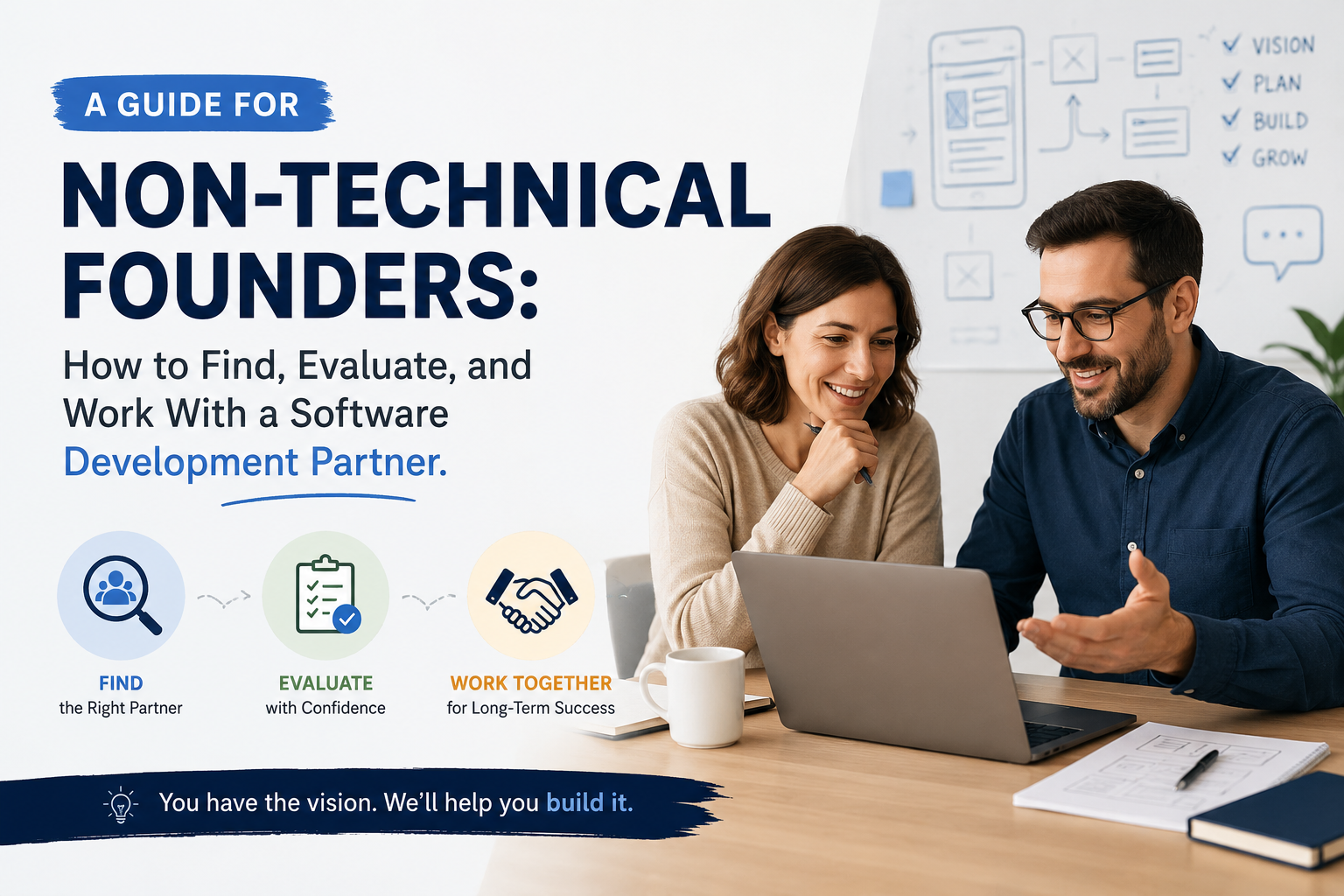
A Guide for Non-Technical Founders: How to Find, Evaluate, and Work With a Software Development Partner
Hiring African Developers
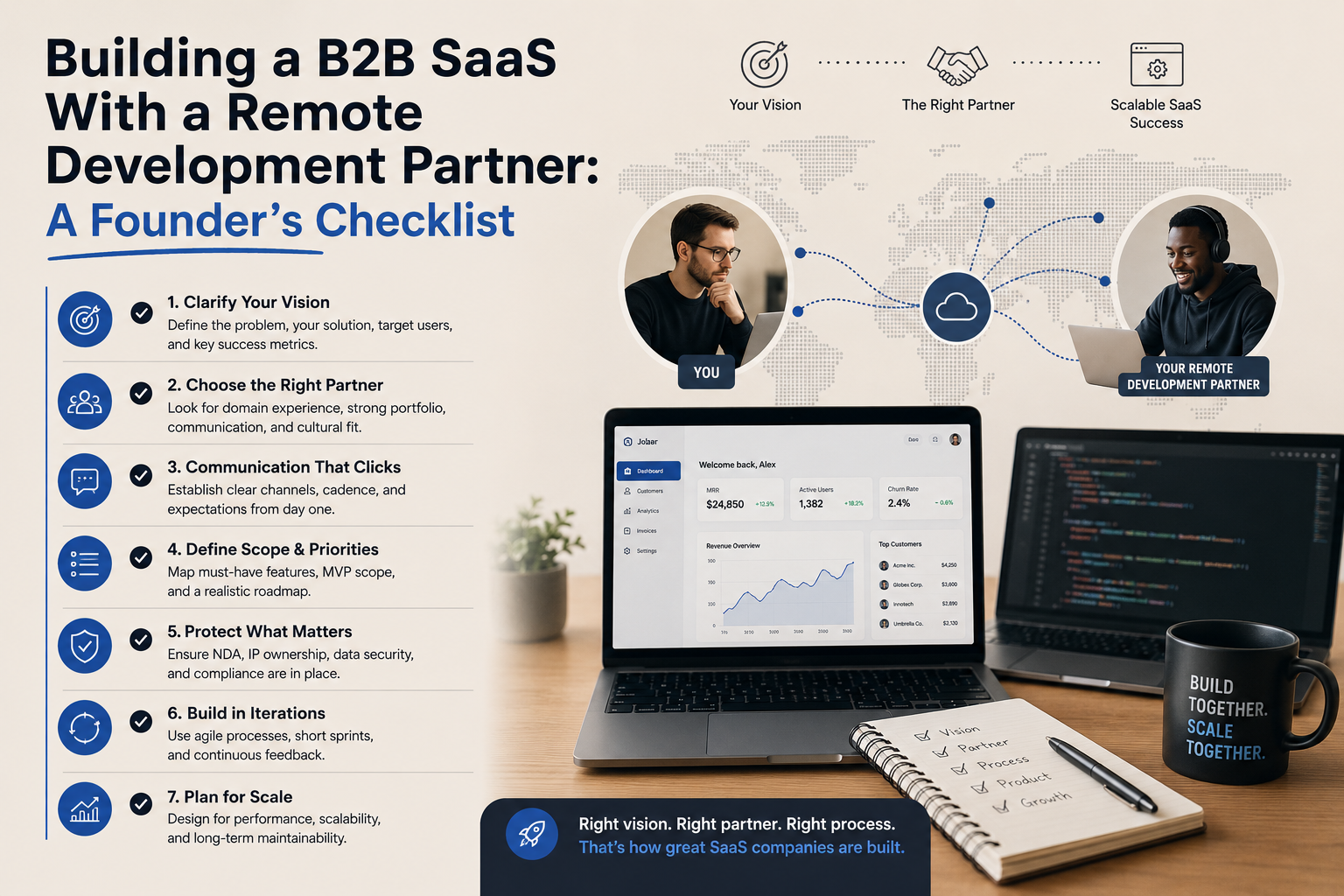
The disadvantage non-technical founders think they have when hiring a development partner is a technical one. It is not. The founders who get burned do not get burned because they could not read the code. They get burned because they evaluated the wrong signals, missed the red flags that are visible to anyone paying attention, and signed a contract that protected the vendor instead of the product.
Between 20 and 25% of outsourcing relationships fail within two years. Half fail within five. The failure mode is almost always the same: a founder needs a development team, collects a few proposals, compares price and timeline estimates, picks the one that sounds most confident, and signs. The problem was in the evaluation not the execution.
This guide is built for the non-technical founder who is about to make that hire. It covers how to find candidates worth evaluating, how to evaluate them without technical knowledge, what a good contract looks like, and how to manage the relationship once it begins. Everything in it can be applied without reading a single line of code.
Part One: Before You Search — Deciding What You Actually Need
The search starts in the wrong place for most founders. They open a browser and look for developers before they have answered the question that shapes every subsequent decision: what kind of partner does your specific build require?
Define your build type first
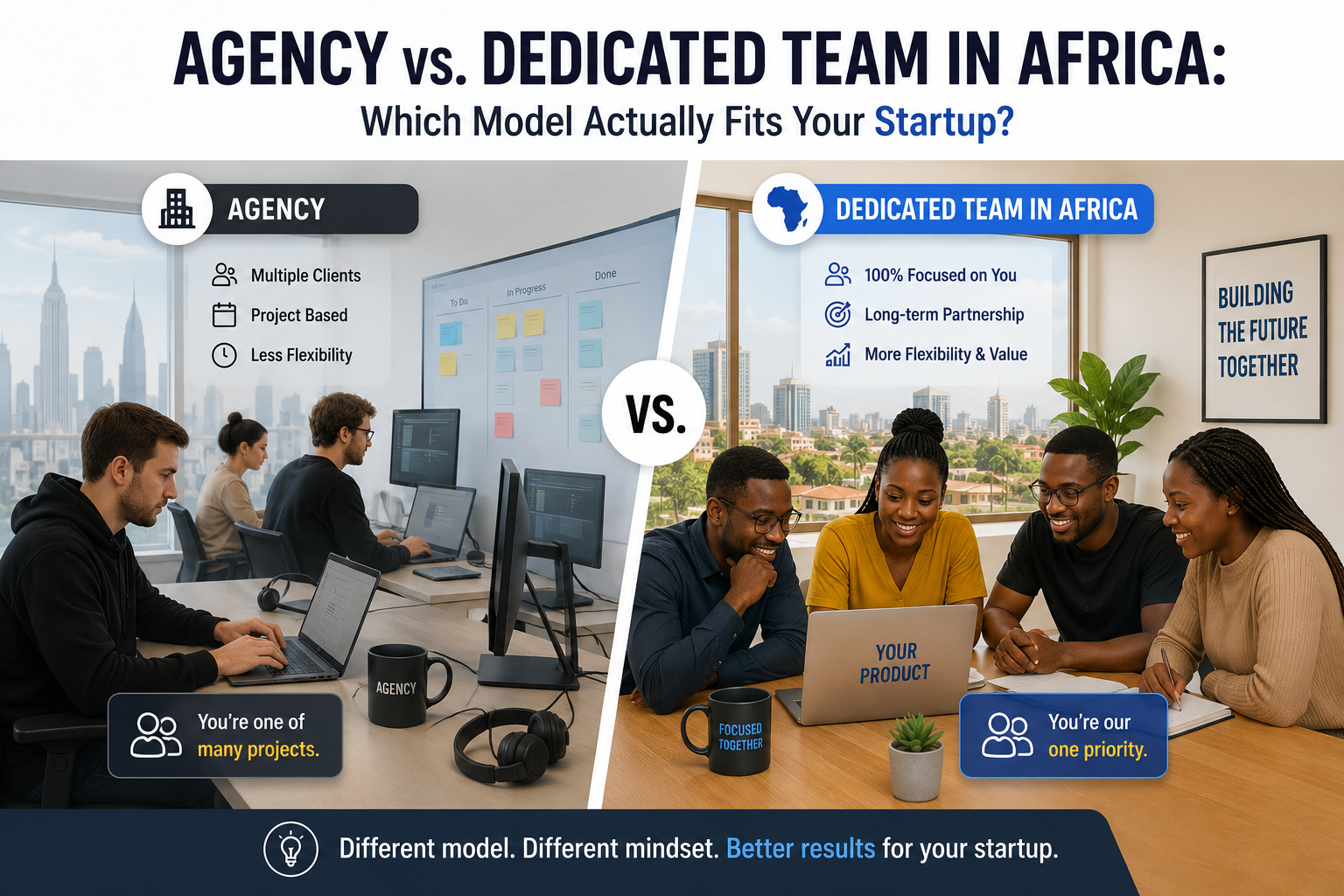
Not every development need calls for the same type of partner. The three common models — a project agency, a dedicated engineering team, and a product development partner — are meaningfully different in what they deliver, who manages the work, and which stage of build they serve.
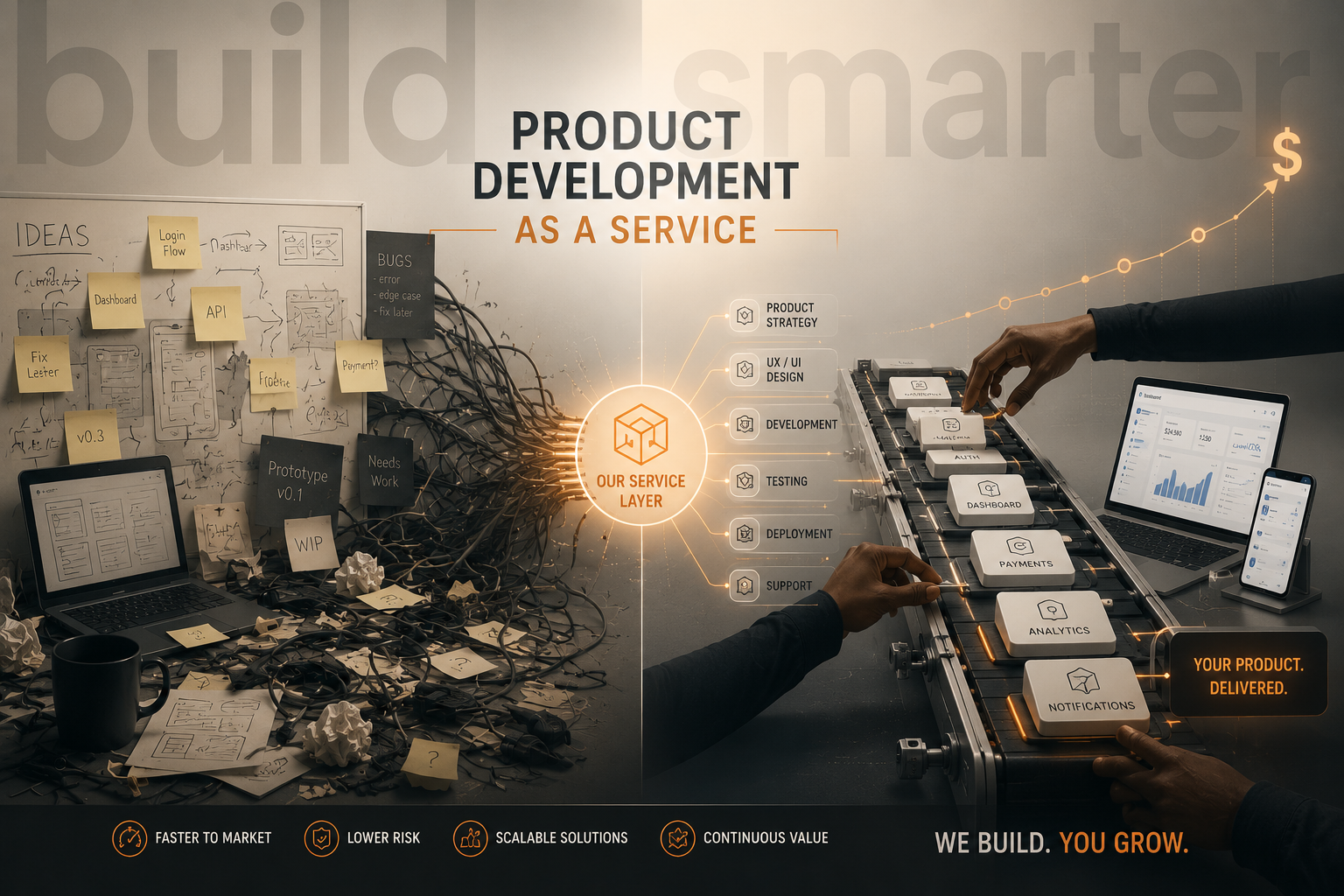
An agency takes a scoped project and delivers it. You define the output; they manage the build internally. This works when requirements are stable and well-defined. A dedicated engineering team embeds into your process and executes under your direction — you manage the product, they build it. A product development partner covers the full lifecycle from discovery through deployment, bringing engineering leadership with them so you do not need a CTO to manage the build.
For a detailed breakdown of which model fits which stage and scope, read: Agency vs. Dedicated Team in Africa: Which Model Fits Your Startup. If you are a non-technical founder building your first product, Product Development as a Service is likely the model that fits — it covers the engineering management function you do not have in-house while keeping product direction in your hands.
Write a product brief before approaching any partner
A vague requirement leads to vague delivery. The brief does not need to be a technical specification. It needs to answer five questions clearly enough that a partner can tell you whether they can build it and roughly what it will cost:
What does the product do? One or two sentences. The core action a user takes, and the outcome they get from it.
Who is the user? The person or organization the product is built for not a demographic, but a specific role with a specific problem.
What are the must-have features at launch? The minimum set that makes the product usable for the first user. Not the full vision, the first version.
What integrations are required? Payment processors, third-party APIs, data sources, authentication providers. These have a disproportionate effect on complexity and cost.
What does success look like in the first 90 days? A number, not a feeling. Users acquired, transactions processed, retention rate, or revenue.
A partner who reviews that brief and comes back with specific, clarifying questions is already demonstrating something about how they operate. A partner who comes back with a quote is demonstrating something too.
Part Two: How to Find Candidates Worth Evaluating
The search for a development partner in 2026 has more options than it has ever had. That is not necessarily an advantage. More options with the same evaluation criteria produces a larger pool of candidates with the same failure rate. The shortlist method below filters for quality before you invest time in evaluation.
Start with referrals from founders at the same stage
A referral from a founder who has shipped a real product with a specific partner is worth more than any portfolio, any review platform, and any sales conversation. The referral tells you the partner delivered for someone in a comparable position to yours not that they claimed to, not that a reviewer said so, but that a person you can call experienced it.
Ask in founder communities, in your investor's portfolio, in the startup WhatsApp groups and Slack channels you are already in. Specific question: "Has anyone worked with a development partner to build [type of product] — and would they work with them again?"
The second half of that question matters. Founders who would not use a partner again are often willing to say so when asked directly, and that negative signal is as valuable as a positive one.
Use review platforms as a filter, not a final decision
G2, Clutch, and Upwork surface legitimate options. Use them to build a long list of 15 to 20 candidates based on relevant experience and geography, then narrow that list using the evaluation criteria below. AI-powered research tools can help you quickly generate initial shortlists and compare vendors, but they should be used as a starting point rather than a final source of truth. The outputs still need to be verified through primary sources such as case studies, client reviews, and direct conversations.
Do not shortlist any partner whose reviews are uniformly positive with no specificity — "great communication," "highly recommend," "10/10" without a named project, outcome, or challenge. Real reviews describe specific things.
Narrow to three to five candidates before investing in evaluation
After an initial review, narrow your list to three to five companies. The goal at this stage is not to find the most famous or highest-rated option but to focus on fit. Each partner should have a clear reason why they are on your shortlist.
That reason should be specific: they have built a product in your category, they have worked with companies at your stage, they have engineering depth in your required stack, they have a geography that gives you time-zone overlap. "They seemed good" is not a reason that will hold up under evaluation.
Part Three: How to Evaluate Without Technical Knowledge
This is the section most non-technical founders think they need the most help with. The honest answer is that the evaluation criteria that matter most — the ones that are most predictive of whether a partner delivers — require no technical knowledge at all.
Evaluate case studies, not portfolios
A portfolio is a collection of things someone built. A case study is an account of a problem they solved. The difference is consequential.
Ask every partner you are evaluating for case studies — not a list of client logos, not screenshots, but written or verbal accounts that tell you: what was the client's problem, what did the partner build to address it, what were the technical constraints, and what was the measurable outcome?
Ask about the hard parts: what was the most difficult technical decision on that project? A partner who can answer that question specifically, naming the tradeoff, explaining why they made the call they made, and describing what they would do differently is showing you how they think under pressure. A partner who responds with generalities is showing you something too.
If the partner claims NDA restrictions prevent them from sharing any details of any past work, that is a red flag. NDAs restrict names and specific client data. They do not prevent a partner from describing the technical complexity of a project they built.
Call references, and ask the right questions
Lack of detail in case studies or hesitation to share client references may indicate performance issues. Every partner worth hiring will provide references. Every reference worth calling will answer these questions honestly:
- Did the product ship? On what timeline relative to what was promised?
- When requirements changed, how did the partner handle it?
- Who was your day-to-day contact, and how responsive were they?
- What would you do differently if you engaged them again?
- Would you work with them again?
The last question produces the most useful answer. A yes with qualifications tells you more than an unqualified yes. A no with an explanation tells you exactly what to avoid.
Evaluate communication before technical skill
You don't need to read code to evaluate a software development agency. You need confidence that they understand your business, can navigate uncertainty, and will own outcomes alongside you. Focus on how they think and communicate, not just what they build.
The first conversation with a candidate partner tells you a great deal if you know what to listen for. A strong partner asks questions about your product before making statements about their capability. They identify potential complications in your brief integrations that are harder than they look, scope ambiguities that will cause problems later, compliance requirements you may not have considered. They explain tradeoffs in plain language without condescending to you.
The red flag to watch for: during the evaluation, the firm never mentions risks or tradeoffs. Everything is "no problem, we can do that." Experienced partners know what is hard. They are upfront about it because they have learned that surprises are more expensive than honest conversations.
A partner who says yes to everything in the sales conversation is telling you how they will behave when things get complicated in production. That behaviour will not improve after you sign.
Ask one technical question you do not need to understand the answer to
You are not evaluating the answer itself. You are evaluating how they answer. Ask: "Walk me through how you would approach the architecture for [the core feature of your product]."
A strong partner gives you a structured answer that acknowledges options, explains why they would choose one over another for your specific context, and identifies what would change that decision. A weak partner gives you a confident answer with no options and no qualifications.
The former is honest. The latter is selling. In software, the selling stops before the build does.
Get an independent technical review for your final choice
If you have no technical background, you can and should hire a third-party IT auditor or technical advisor to conduct an independent review. This does not have to be expensive. Many experienced CTOs and senior engineers offer consulting specifically for this purpose reviewing a vendor's proposal, code samples from previous projects, or architecture recommendations for a few hours of their time.
A few hundred dollars spent on a technical advisor before signing a contract worth tens of thousands is one of the highest-leverage investments a non-technical founder can make.
Part Four: The Contract: What to Protect Before Work Begins
Most outsourcing contracts are provided by the vendor. A vendor-provided contract is optimised for the vendor. This is not malicious, it is the predictable outcome of who wrote it. Start from your own template wherever possible, and verify these six elements in every contract you sign.
Intellectual property assignment
Your outsourcing contract needs to cover six things: IP ownership, confidentiality, milestone definitions with acceptance criteria, termination rights, SLA commitments, and liability limits. Always start from your own template, not the vendor's. Have everything signed before any work starts. A good vendor will sign fair terms without hesitation.
IP ownership is the most critical element. The contract must state that all code, documentation, design assets, and technical specifications produced under the engagement are assigned to you the client from the moment they are created. Not after final payment. Not at project completion. From creation.
Avoid contracts with no IP ownership clause, 100% upfront payment with no milestone structure, no termination rights, and vague scope. If a vendor pushes back on IP assignment language, that is material information about their operating model.
Payment structure tied to milestones
Milestone-based payments balance risk for both parties. A typical structure: 20–30% upfront deposit, 40–50% in two to three milestone payments tied to completed features, and 20–30% upon final delivery and acceptance.
Each milestone payment should be tied to a written acceptance criterion — a specific, testable description of what "done" means for that deliverable. Vague scope causes 60% of contract disputes. A milestone defined as "complete the backend" is not a milestone. A milestone defined as "the user authentication flow works for all three user roles, tested in staging with documented test cases" is one you can evaluate without technical knowledge.
Termination rights
You need the ability to exit the engagement without penalty if the partner misses defined milestones, produces work that does not meet documented acceptance criteria, or repeatedly fails to communicate within agreed response times. A contract without clean termination rights locks you into a relationship regardless of performance. No vendor with confidence in their delivery will object to fair termination clauses.
Scope change process
Requirements change in almost every real product build. The contract needs to specify how scope changes are handled, how they are documented, how they are priced, and who has to approve them before work begins. A contract silent on scope changes hands the vendor a negotiating position every time you have a new idea or discover something that needs to change.
Part Five: Working With Your Partner — What Good Looks Like
The contract is signed. The engagement begins. Here is what to expect from a partner who is delivering, and how to distinguish progress from the appearance of progress.
Expect a discovery phase before any production code is written
A thorough discovery process including: stakeholder interviews, workflow mapping, and requirements documentation signals that they understand how to set projects up for success.
Any partner who skips discovery and moves directly to code is optimising for the appearance of speed. Discovery is what makes the code they write the correct code. A two-week discovery sprint that produces a system architecture, a sprint plan, and documented user flows costs time upfront and saves multiples of that time later.
Working demos every two weeks not status updates
The only reliable way to track progress on a remote software build without technical knowledge is to see working software. A status update says 60% complete. A demo shows you whether the product works the way you imagined it. Those are different things, and the difference matters.
Require a working demo at the end of every two-week sprint. If a demo cannot be produced or if the team says the work is in progress but not ready to show escalate the question of scope. A sprint that does not produce demonstrable software is either scoped incorrectly or not progressing as reported.
Know the difference between a root cause and an excuse
When something runs late, there is a meaningful difference in how a strong partner explains it versus how a weak one does.
A strong team says: "The third-party payment API changed its authentication model, which required us to rebuild the integration layer. We have updated the timeline by four days." That is a root cause. You can evaluate whether it is plausible. A troubled team says: "It is just taking a bit more time." No reason. No revised estimate. No explanation of what specifically ran over and why.
Vagueness in communication reflects vagueness in planning. Large-scale IT projects run over budget by an average of 27%, and projects with vague or undefined scope are three times more likely to exceed their original budget, according to McKinsey Digital research. Not every delay is a problem. Every unexplained delay is.
Ask questions constantly and note how they are received
Non-technical founders should be asking questions constantly. Good technical partners welcome that. They know that an informed founder makes better decisions, asks for the right things, and causes fewer costly misunderstandings down the line. A development partner who makes you feel ignorant for asking questions is not protecting their workflow. They are protecting their ability to work without oversight.
That is not a minor cultural difference. That is a fundamental operating principle. An accountable partner welcomes scrutiny because scrutiny is how problems get caught before they compound.
Know when to escalate
If demos are consistently postponed, if explanations for delays are consistently vague, if your questions are consistently deflected, document everything before escalating. Date every missed deadline, every postponed demo, every non-answer.
Once you have documentation, request a third-party code audit. This is not the same as firing your developer. It is asking a neutral expert to review what has been built. A good audit tells you what is actually in the codebase, what the real risks are, and what a rescue versus a rebuild would involve.
Part Six: The Africa Advantage for Non-Technical Founders
The global developer shortage is real and worsening. An estimated 77% of companies report they cannot find the talent they need, and with AI projected to create 97 million new jobs by 2026, the competition for engineering talent is intensifying.
Africa's developer ecosystem is one of the most important answers to that problem. Africa's developer base grew 21% annually between 2019 and 2024 — the fastest growth rate of any continent globally, according to a 2026 BCG report. Nigeria, South Africa, and Egypt each have developer communities exceeding 500,000. Forty percent of African developers are now employed by companies based outside the continent, establishing a track record of delivery at global standards.
For a non-technical founder specifically, there are two reasons African engineering partners deserve serious consideration above other outsourcing geographies.
The economics buy runway. Tribesquare clients realize 20–30% cost savings compared to equivalent North American or Western European teams. For a first product build, that difference is not a rounding error, it is often three to four additional months of operating runway. That runway is the margin between finding product-market fit and running out of time before you do.
The time-zone alignment enables real oversight. African engineering teams working with European founders have four to six hours of synchronous overlap per day. That means the demo you need to see to know whether progress is real can happen in the same business day. The question you need answered to unblock the sprint gets answered in real time. The oversight advantages described in this guide, demos, questions, escalation all depend on a communication loop that works. African teams deliver that loop in a way that purely asynchronous geographies do not.
What Tribesquare's Engagement Looks Like for Non-Technical Founders
Tribesquare's model is built specifically to serve founders who have strong product clarity but no internal engineering leadership. We provide the delivery management, the technical architecture decisions, and the sprint execution. The founder provides the product direction, what the product does, who it is for, what success looks like.
Every engagement starts with a discovery sprint. The sprint produces the artefacts, architecture, user flows, data model, sprint plan that allow the build to proceed without the founder needing to be in every technical conversation. Every two-week sprint ends with a working demo. IP is assigned to the client from the first commit.
FoodOnline's founder was non-technical. The product went from brief to working MVP in four weeks, then to full v1 serving five thousand customers and vendors across twenty Nigerian cities at above 99% uptime. GetPayed onboarded ten professionals at an average of two weeks each, with a 90% retention rate across the embedded team. Justrite's crash rate dropped from 40% to under 1% in ten weeks.
The Decision, Stated Plainly
You do not need to learn to code to find a development partner who will deliver. You need to evaluate the right signals, case studies not portfolios, communication quality under pressure, contract terms that assign IP from day one, and structure the engagement so that accountability is built into the process, not assumed from the relationship.
The non-technical founders who get this right are not the ones who studied development. They are the ones who asked better questions at the start, negotiated a contract that protected them, and required working software at every sprint end.
This guide is the starting point. The next step is a conversation.
Talk to Us
If you are a non-technical founder who knows what you want to build and wants to understand what a Tribesquare engagement looks like in practice the process, the team, the timeline, and the economics — book a discovery call. We will ask the right questions, review your product brief, and tell you plainly whether we are the right partner for what you are building.